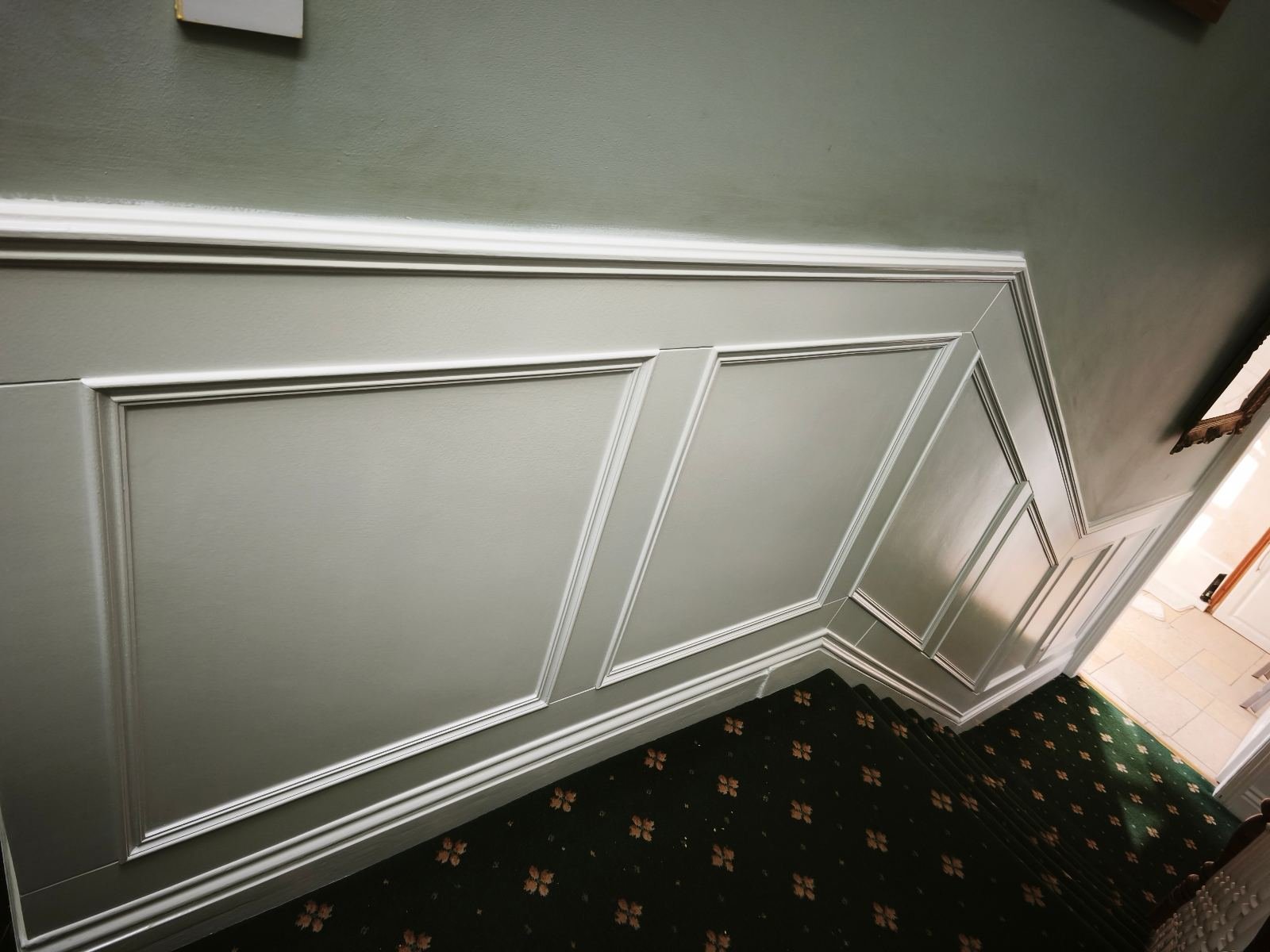
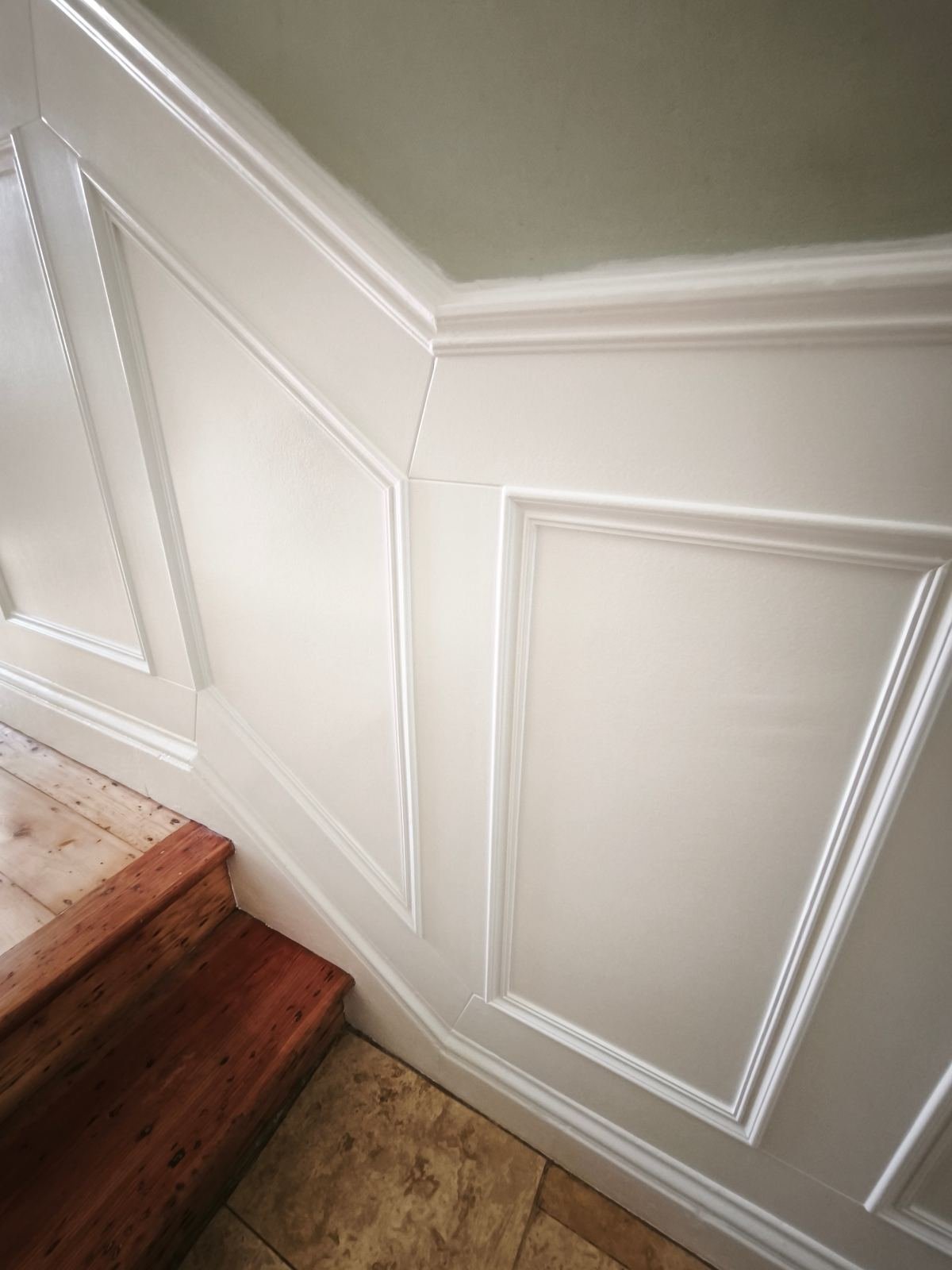
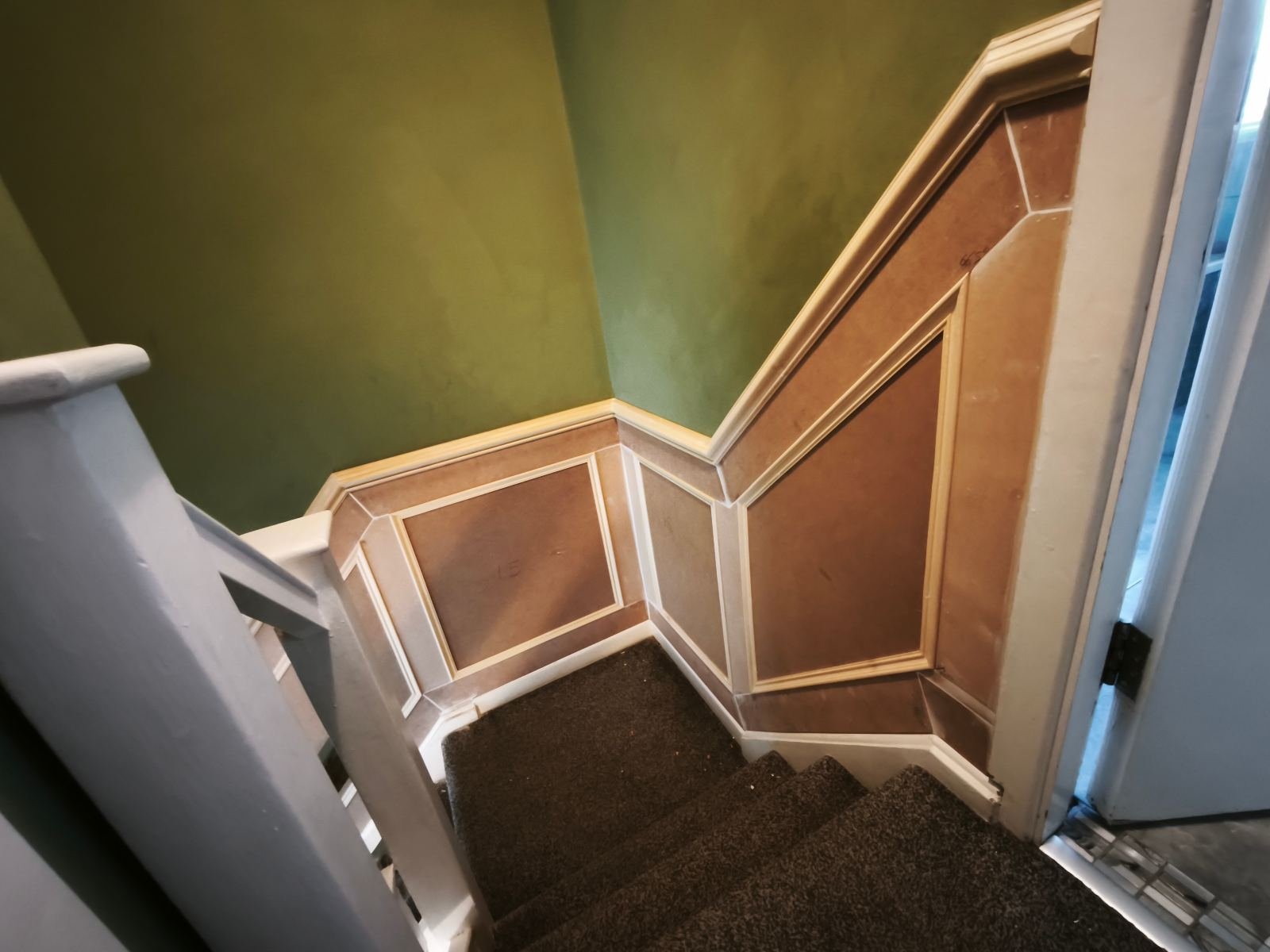
The period method, sometimes called judges panelling. Top and bottom rails and uprights are fitted to the wall, the wall behind is covered in board, then mouldings are set inside each square, so the panels sit genuinely recessed with real depth and shadow rather than mouldings stuck flat to a wall. Boarding is optional — the square can be left as bare wall if you would rather keep the original plaster on show. Once the panelling is fixed, a new dado rail is mounted on top of it to cap the run off, unless the room already has an original rail worth keeping and working to. If I am not painting it myself, I fill the nail holes and joints before I leave — it will still need a sand and any additional filling after the first coat, at the painter's discretion.
Real depth
The panel sits back behind the frame, the way it was done in period homes. You get a shadow line that flat applied mouldings simply cannot give you.
Laid out to your wall
Square sizes and the dado line are set out around your room, your skirting and your doors — not off a standard sheet. New skirting can be run across the whole room at the same time if you want everything matching.
Fitted flush
Packed and propped while the adhesive grabs so the rails and uprights sit flush with each other, then bonded with modern foam adhesive so nothing lifts or springs down the line.
No hairline cracks
Where two pieces meet I bevel the edges slightly, which leaves a channel for the filler to key into. Fill a flat butt joint and it shrinks back to a hairline inside a year — give the filler somewhere to sit and it stays gone. Proper wood filler, so the line stays invisible for years.
Smooth or chamfered joints
Two ways to finish it. Joints filled and sanded so the panelling reads as one continuous surface, or each panel chamfered where it meets the next, leaving a fine shadow line between them for a more period look. Worth deciding before we start, since it changes how the wall catches the light.
Thickness to suit the room
Board and moulding thickness is chosen for the room rather than fixed. It can be kept slim so it sits neatly against existing skirting, or built up to meet a deep Victorian skirting or an original dado rail in a period house, so the new work looks like it was always there.
Thinking about recessed panelling?
Tell me the room and what you have in mind. Quotes are free, and I come to you.
Other services